Ugandasafaris/ Uganda safari/ Uganda tours/Uganda tour/Kenya tours/ Tanzania tours/
Rwandatours/adventure/nature/naturewalks/pearlof Africa/culturaltours/gorillatrekking/chimpanzeetrekking/primates/wildebeest
migration/congotours/southsudansafaris/masaimaranationalpark/serengetinationalpark/bwindiimpenetrablenationalpark/nairobinationalpark/murchisonfallsnationalpark/masaiculturalexperience/mt.Kilimajarohiking/mt.rwenzorihiking/mt.kenyahiking/mundariculturalexperience/karimajongoculturalexperience/volcanonational
park/virunganationalpark/virungavolcanicmountain/kampala/Nairobi/kigali/Mombasa/Dar-el-salam/kishasha/Jumba/Bujumbula/Burundi
tours/Mogadishu/Somaliatours/Ethiopiatours.
Lakes are often naturally occurring, relatively large and fixed water bodies on or near the Earth’s surface. They are localized in a basin or interconnected basins surrounded by dry land and are completely separate from the ocean although they may be connected to the ocean by rivers. Lakes are some of the world’s most popular tourism attractions. However, increased pressure from the tourism industry, land and water uses has made sustainable development of the lakes very challenging and their importance for tourism has been acknowledged despite the existence of limited studies on lake tourism. Below are some of the examples of lakes in Uganda plus the activities they promote to the nearby communities:
Lake Victoria
Lake Victoria is the largest fresh water lake in Africa and the second-largest freshwater lake in the world by surface area covering about 59,947 square kilometres. It has an average depth of 40 meters and maximum depth of 81 meters. It is one of the African Great Lakes and is locally called Lake Nalubaaale, with its northern tip stretching into Uganda, while the majority of the lake lies within the borders of Tanzania and Kenya. Lake Victoria is a home to many fish species such as the Nile Perch and the Nile Tilapia.
This lake supports several activities both to the local community and tourists to the country and these include:
Bird watching as the lake has a variety of bird species on the great wetland surface which make it a good place for bird viewing for example the island fish eagles diving from high above into the lake water to catch their prey.
Lake Victoria has several islands which promote recreation activities in the country for example Ssesse Island.
The lake is a home to several animals that live in the region of which some are closely associated with the lake itself and the nearby wetlands among which include hippopotami, African clawless otter, spotted necked otter, marsh mongoose, sitatunga, cane rats and giant otter shrew, reptiles like Nile crocodiles, African helmeted turtles, variable mud turtles and Williams’ mud turtles.
Lake Albert
Lake Albert is another major lake in Uganda, located in the western part of the country. It is the second-largest lake in Uganda by surface area covering about 160 kilometers long and 30 kilometers wide. It is a home to a host of wonderful wildlife both aquatic and semi-aquatic animals including hippopotami, crocodiles, water bucks and so many others. It inhabits between 40 and 55 fish species including Nile Perch species which is a source of income to the basin communities.
The surrounding areas support subsistence farming to the population where crops like beans, maize and bananas are grown on top of the cash crops like tea, coffee which generate income and offer opportunities for sustainable agricultural intensification.
The Albertine region is also rich in mineral oil and other minerals like salt, gold gypsum and coltan on top of the beautiful Rift Valley scenery.
Lake Bunyonyi
Lake Bunyonyi is a small but beautiful lake located in the southwestern part of Uganda between Kisoro and Kabale districts. It is considered to be the deepest lake in the country because it is recorded to be 900 meters deep hence recorded as second deepest in the whole world following Lake Tanganyika. It is known for its crystal-clear waters and stunning scenery, with steep cliffs and rolling hills surrounding the lake. Lake Bunyonyi is a popular destination for hiking and trekking, with a number of trails leading to the lake’s shores. The lake is also home to a number of islands, including the famous Bwawa Island, which is a popular spot for swimming and picnicking. It is also a home of many little birds such as grey shrike, pied wagtail, pin tailed where, cinnamon bronze manikin among others.
Lake Katwe
Lake Katwe is a small lake located in the southwestern part of Uganda. Salt content of the Lake is approximately 13.5% and lake bed is 0.8 meters thick containing approximately over 12 million tones of salt. It is the most salty lake in Uganda and is where quality salt is mined from.
It is also surrounded with stunning green hills and trees, valleys and is filled with numerous bird species such as Papyrus gonolek, black and white casqued hornbill, pink backed pelican, grey heron, and great blue turaco among others making the lake a beautiful birding tour destination.
The lake has a rich cultural community that is made of the Bakingwe which provide ancient information about the lake. This can be achieved through taking village walks experiencing the traditional dances and songs of the communities and also interaction with the locals.
Lake Kyoga
Lake Kyoga is a small lake located in the eastern part of Uganda. It is known to be a shallow and swampiest lake in the country. It covers a total surface area of about 1720 square kilometers and is about 5.7 meters deep. It is known for its scenic beauty, with rolling hills and lush vegetation surrounding the lake. Lake Kyoga is a popular destination for bird watching, with a number of species of birds calling the lake home.
Lake George
Lake George is also referred to as Lake Dweru. It is a small lake located in the southwestern part of Uganda, in Kasese District on the escarpments of the western arm of the east African rift valley. It occupies about 250 square kilometers and is a bit shallow with an average depth of around 2.4 metres. It is linked to Lake Edward by Kazinga Channel and was named after a famous British royal family member, Prince George. It is known for its scenic beauty, with rolling hills and lush vegetation surrounding the lake. It is also known to be among the clearest and cleanest lakes in the word. Lake George has three small islands that are Kankuranga, Iranqara and Akika islands.
Lake George is surrounded by wetland grass which is habitat to various wildlife such as the sitatunga antelope and elephant, including over 150 bird species like the African jacana and the rare saddle-billed stork.
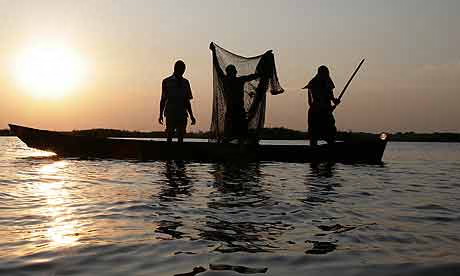
The lake is inhabited by many fish species like the Nile Tilapia and Haplochromis thus supports fishing activity to various surrounding villages.
Lake Mburo
Lake Mburo is a freshwater lake located in Nyabushozi County, Kiruhura District in the Ankole sub region of Uganda, near the town of Mbarara in Lake Mburo National Park. It is shallow with a maximum depth of approximately 5 meters. It spans an area of approximately 260 square kilometers and surrounded by rolling hills, open grasslands and patches of woodland. It is a habitat for over 315 bird species and probably the best place to view the acacia-associated birds such as the black throated barbet, the southern ground hornbill.
It is important for fishing by the surrounding communities who rely on the lake as a vital source of income and sustenance. It inhabits fish species such as tilapia, lungfish, mudfish and catfish. The lake also offers boat safaris, sport fishing and guided nature walks to adventurers who observe the diverse wildlife inhabiting the area.
Lake Edward
Lake Edwardis located in the Albertine Rift Valley sharing borders with countries Democratic Republic of Congo from the northern part of the lake shore. It is the smallest among the African Great Lakes and covers a total surface area of about 920 meters and a distance of about 40 kilometres long. It is bordered by two national parks; Virunga National Park and Queen Elizabeth national park
The lake is habitat to 81 fish species boasting chances for high fish harvest and improvement in handling and value addition for commercial fish species like the Nile tilapia, African catfish, Semutundu and many others.
Its climate is favorable for cash crop farming like tea, coffee and cotton and food crop growing such as beans, maize and bananas for the nearby communities.
Lake Wamala
This is a fresh water lake located in Mityana District. It covers a surface area of 250 square kilometers and made of Lwanja Island, Mabo Island and Bagwe Island. It is one of the cleanest lakes with calm waters in the country. Its wetlands contain endangered species of birds and animals including the sitatunga well known as “enjobe” in Luganda, hippopotami, waterbucks and many others.
It is a source of both fresh and smoked fish sold locally and in big towns particularly tilapia, catfish and lungfish.
It is of traditional and cultural importance to the people of Buganda in central Uganda.
Kabaka’s Lake
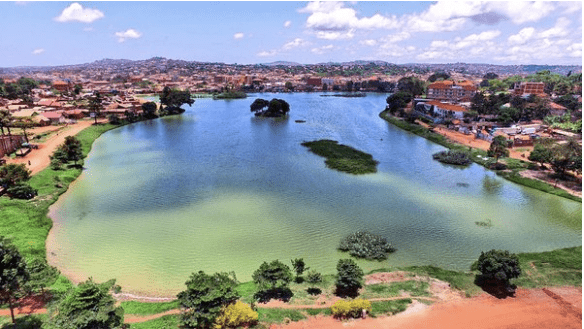
This is the largest man made lake located in Ndeeba, Kampala City. It occupies an area of about 2 square kilometers and about 200 feet deep on average and a home to many water bird species and gives chance to enjoy the great sites, bird watching and engage with the local communities around it.